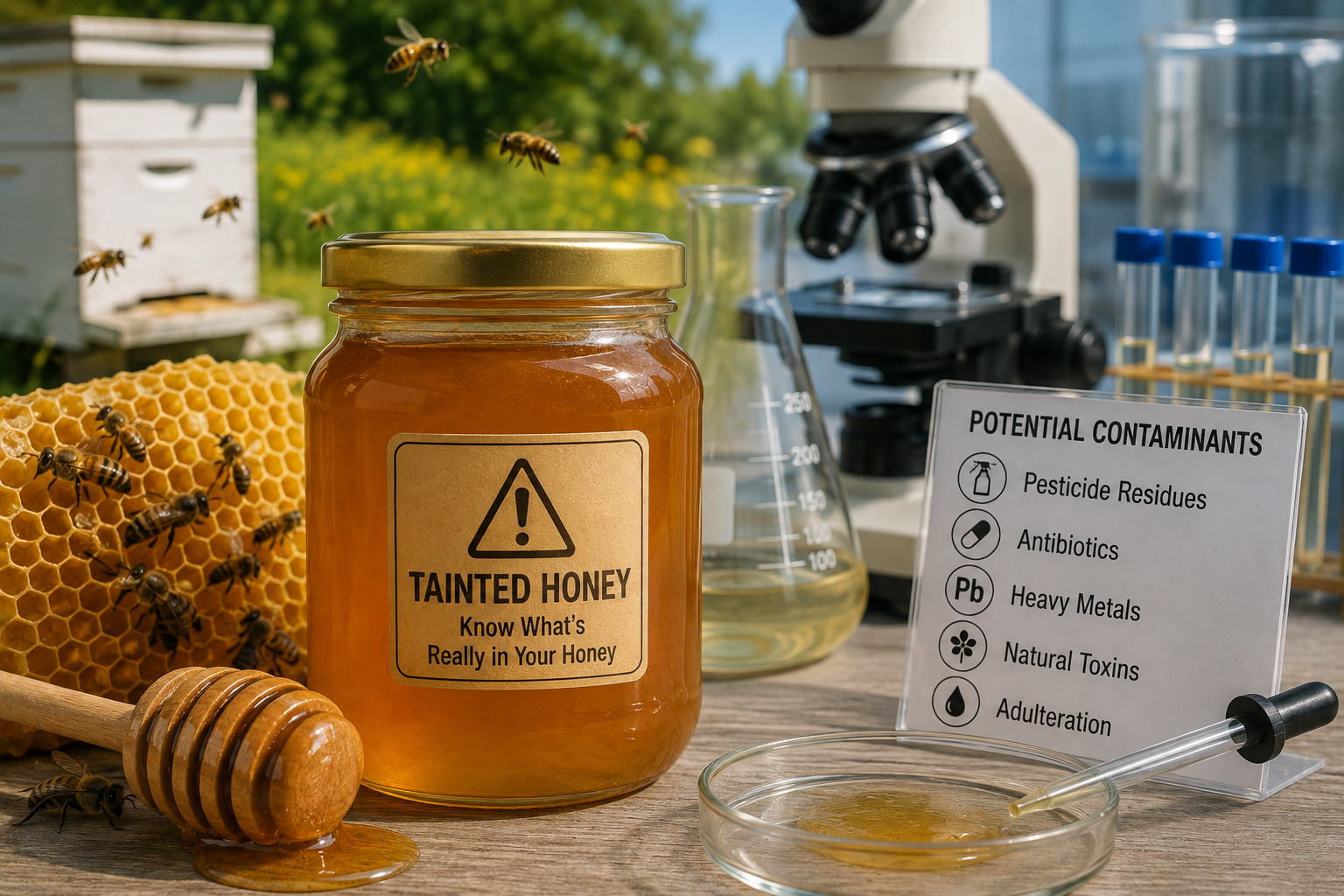
Honey has been valued as a food for thousands of years, but like any food, its safety depends on where it comes from, how it is produced, and what it may have been exposed to before reaching the consumer. Most properly produced honey is safe for the general population. Problems arise when honey is contaminated, adulterated, improperly handled, or naturally contains harmful substances.
The phrase "tainted honey" can describe several very different problems. Honey may contain pesticide or veterinary-drug residues, environmental contaminants such as heavy metals, undeclared added sweeteners, natural plant toxins, or microorganisms and spores. These hazards do not all cause the same illnesses, and simply detecting a trace residue does not automatically mean that a jar of honey is dangerous.
The health risk from contaminated honey depends on what the contaminant is, how much is present, how much honey is eaten, and the age and health of the person consuming it.
Pesticide and Beekeeping-Treatment Residues
Bees forage across a wide area and can encounter agricultural pesticides in the environment. Beekeepers may also use approved products to control Varroa mites and other hive pests. When treatments are used incorrectly, at excessive doses, or at inappropriate times, unwanted residues can potentially enter hive products.
The possible health effects depend on the particular chemical and the level of exposure. High or inappropriate exposure to some pesticides can affect the nervous system or other organs, while long-term exposure is evaluated differently for each compound. This is why pesticide tolerances, treatment directions, and harvest restrictions matter.
It is important not to confuse the presence of a measurable residue with a dose proven to cause illness. Modern laboratories can detect extremely small quantities of chemicals. Risk depends on concentration and exposure, not detection alone.
Antibiotic and Veterinary-Drug Residues
Antibiotics have historically been used in some beekeeping operations to manage bacterial diseases. Residues from inappropriate antibiotic use are a food-safety concern. Depending on the drug and the amount present, concerns can include allergic reactions in susceptible individuals and the broader public-health problem of antimicrobial resistance.
Responsible beekeeping requires following applicable veterinary and food-safety rules rather than using medications casually or attempting to prevent disease by routinely medicating healthy colonies.
Heavy Metals and Environmental Pollution
Honey can reflect the environment in which bees forage. Bees may encounter contaminants from industrial emissions, contaminated soil and dust, traffic, or polluted water. Heavy metals are of particular concern because some can accumulate in the body when exposure is significant and prolonged.
The potential effects vary by metal. Lead, for example, can damage the nervous system and is especially concerning for children. Other metals can affect the kidneys, nervous system, or other organs at sufficient exposure levels.
Natural Toxins: When the Flowers Themselves Are the Problem
Not every dangerous substance in honey comes from human activity. Bees can collect nectar from plants that naturally contain toxins. One well-known example involves grayanotoxins, which occur in certain rhododendrons and related plants.
Honey containing sufficiently high concentrations of grayanotoxins is sometimes called "mad honey." Poisoning can cause symptoms including nausea, vomiting, dizziness, weakness, sweating, low blood pressure, and abnormal heart rate. Serious poisoning is uncommon, but this is a genuine example of naturally contaminated honey causing human illness.
Honey and Infant Botulism
Honey can contain spores of bacteria that cause botulism. Older children and healthy adults normally have mature intestinal systems that prevent these spores from causing infant botulism. An infant's intestinal tract, however, can allow the spores to grow and produce botulinum neurotoxin.
Infant botulism can cause constipation, poor feeding, a weak cry, loss of muscle tone, difficulty swallowing, and progressive paralysis. It is a medical emergency. The safest rule is simple: no honey or honey-containing products for babies under one year of age.
Adulterated Honey Is Not Always Poisonous Honey
Another issue is honey adulteration. Unscrupulous producers or suppliers may add cheaper sweeteners such as corn, cane, rice, or sugar-beet syrups and still market the product as pure honey. This is food fraud.
The FDA has repeatedly tested honey for undeclared sweeteners and has found violative samples. However, added ordinary food-grade syrup should not automatically be described as "poison." The immediate problem may be deception and inaccurate labeling rather than acute toxicity.
Adulteration can become a direct health problem when an undeclared substance introduces an allergen, toxin, unsafe chemical, or other ingredient the consumer has no reason to expect. For people who closely manage dietary sugar, falsely labeled products can also interfere with informed food choices.
Possible Warning Signs After Eating Contaminated Honey
There is no single set of symptoms that identifies "tainted honey" because different contaminants act differently. Depending on the cause and dose, symptoms could include:
- Nausea, vomiting, stomach pain, or diarrhea.
- Dizziness, weakness, sweating, or faintness.
- Abnormal heart rate or low blood pressure with certain natural toxins.
- Allergic reactions to an unexpected contaminant or drug residue.
- Neurological symptoms after significant exposure to certain toxins or contaminants.
- Long-term health effects from repeated exposure to some contaminants at harmful levels.
These symptoms have many possible causes and cannot establish that honey was responsible. Severe symptoms, breathing difficulty, fainting, paralysis, or a serious allergic reaction require prompt medical attention.
Why Traceability Matters
One of the strongest protections consumers have is knowing where their food comes from. Honey that can be traced to a beekeeper or responsible producer provides accountability that can be difficult to obtain from an anonymous product that has passed through numerous brokers, processors, and countries.
Traceability does not mean that locally produced honey is magically immune from contamination. Local beekeepers must still manage medications, pesticides, equipment, extraction, storage, and sanitation responsibly. What local sourcing can provide is the opportunity to ask direct questions: Where are the hives? How are mites treated? Are honey supers removed during treatments when required? How is the honey extracted and stored?
How Consumers Can Reduce Their Risk
- Buy honey from a producer or supplier you trust.
- Look for clear labeling and traceable origin.
- Be cautious of honey sold at prices that seem unrealistically low.
- Do not give honey to infants younger than one year.
- Ask local beekeepers how they manage Varroa mites and hive medications.
- Store honey in clean, food-safe containers.
- If honey has an unusual chemical odor, visible foreign material, or signs of improper handling, do not consume it.
The Bottom Line
Honey should not be portrayed as inherently dangerous. Properly produced honey has a long history as a food, and contamination severe enough to cause illness is not the normal experience of honey consumers. But honey is not magically protected from the problems that can affect other foods.
Pesticide residues, veterinary drugs, environmental contaminants, natural plant toxins, microbial hazards for infants, and deliberate adulteration are all legitimate reasons for good production practices and food-safety oversight. The actual danger depends on the contaminant and the dose.
For consumers, purity begins with trust and traceability. Knowing who produced your honey, where the bees were kept, and how the colonies were managed gives you something that a label alone cannot always provide: a direct connection to the source of your food.